Joya de Ceren
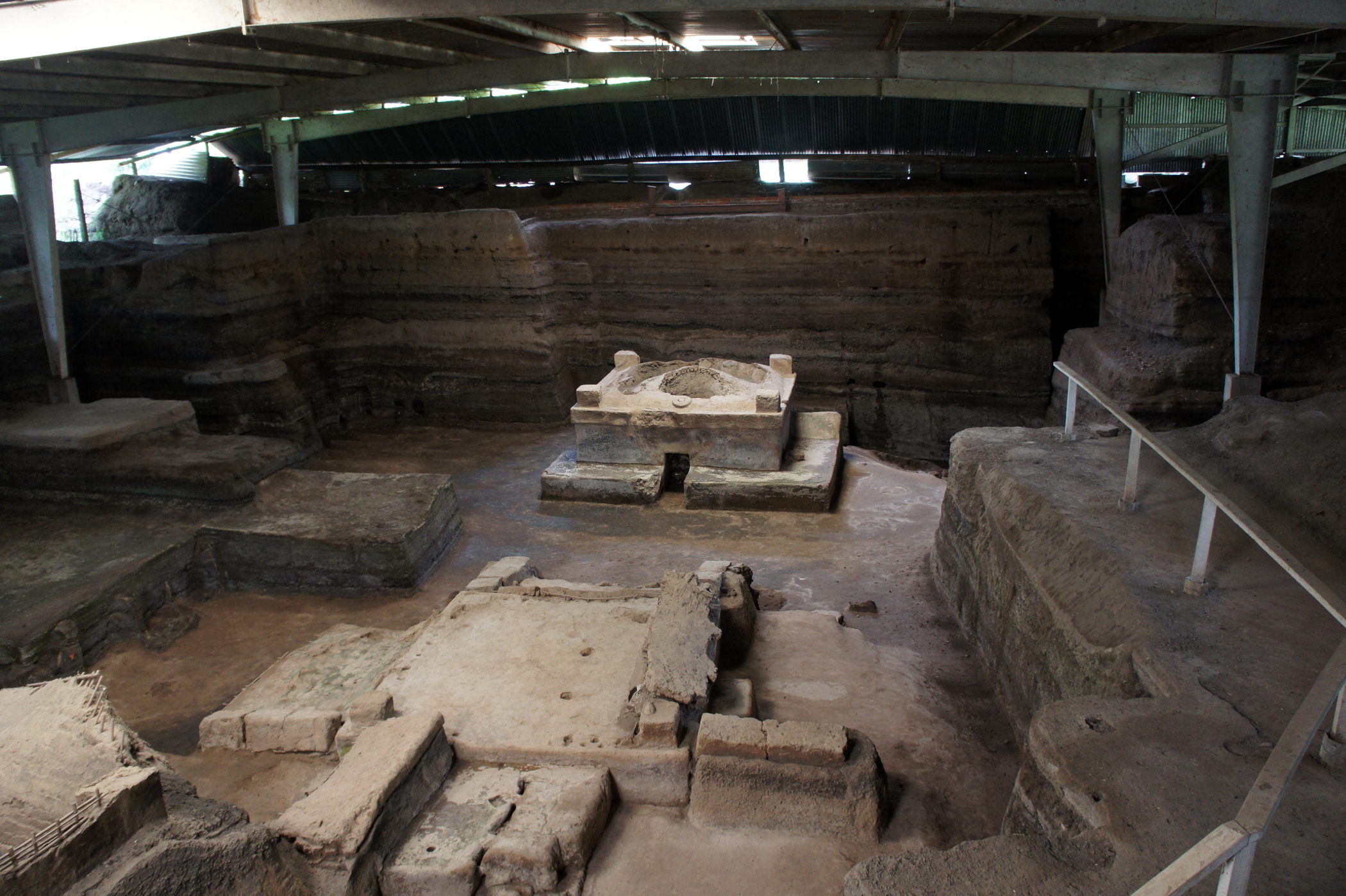
Joya de Ceren is an ancient Maya farming village that was buried under volcanic ash around 1,400 years ago. It is often called the 'Pompeii of the Americas' because the ash preserved houses, gardens, and everyday tools almost perfectly.
It is a UNESCO World Heritage Site and the best window we have into how ordinary Maya families really lived, not just kings and temples. Visitors love seeing the shapes of clay pots, sleeping mats, and even old cornfields frozen in time.
History
Around the year 600, a nearby volcano erupted and covered the village in soft ash, sealing everything like a time capsule. Because people fled quickly, scientists found their food, dishes, and gardens exactly where they left them.
What You See
Covered walkways let you look down at the preserved mud-and-thatch buildings, including a kitchen, a workshop, and a community sweat house. A small museum shows real objects like painted gourds and grinding stones.
Visiting Tips
The site sits in a warm, sunny valley, so bring a hat, water, and sunscreen for the open areas. It is flat and easy to walk, making it a fun and gentle history trip for kids and grandparents alike.