Apollo Belvedere
The artist
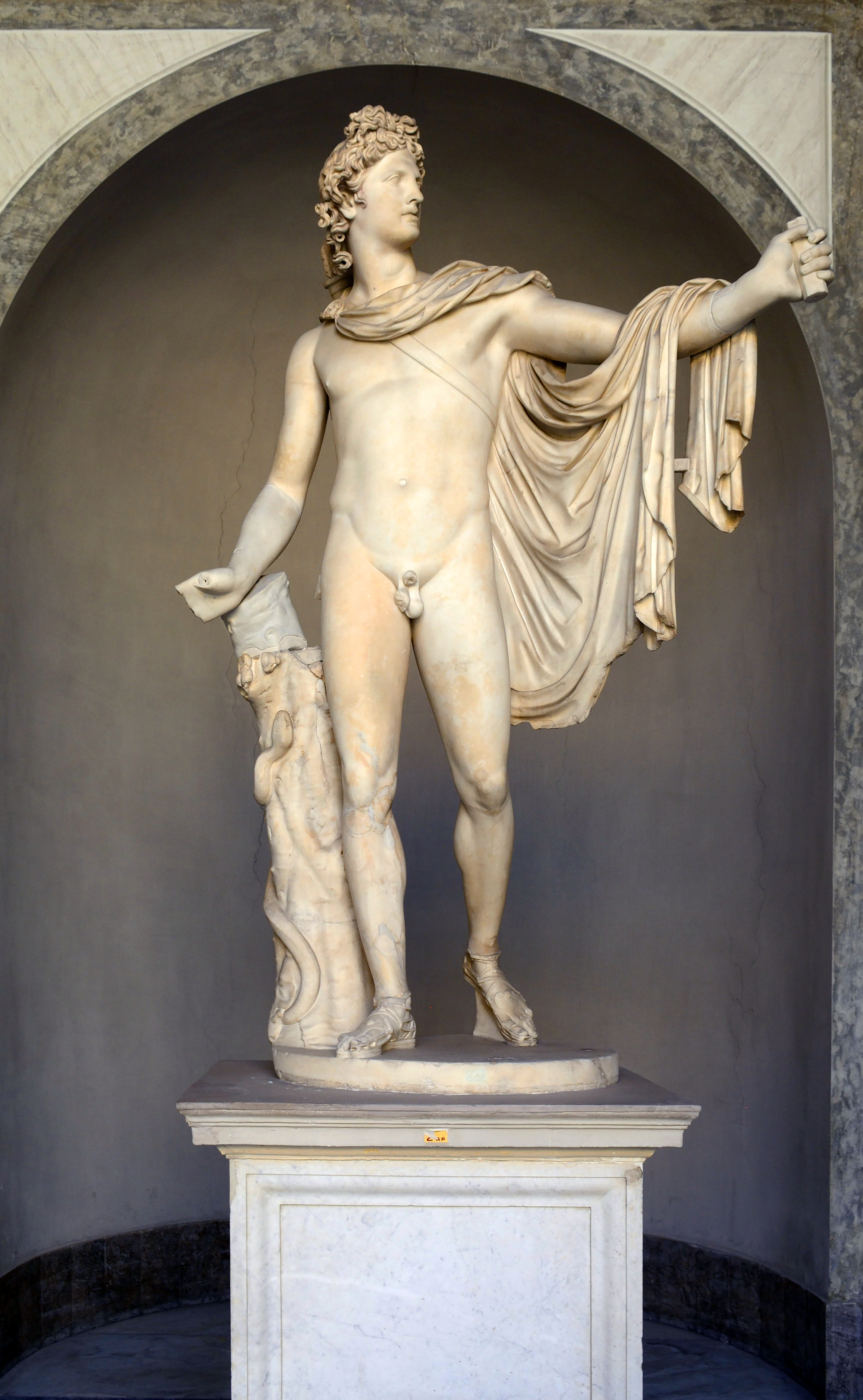
A Roman copy after a lost Greek bronze often credited to the sculptor Leochares.
What you see
A tall, graceful young god standing lightly on his feet, turning his head to one side as if he has just let an arrow fly from his bow.
The story
The marble version was made around 120 to 140 AD, and for hundreds of years it was seen as the perfect example of youthful beauty and calm strength.
The style
It is a marble copy of a Greek bronze, carved so smoothly that Apollo's skin and flowing hair look soft and lifelike.
Look closer
Look at his relaxed, confident stance and the cloak draped over one arm, details that made artists study this statue for centuries.
Where to see it
It stands in the Vatican Museums in Rome, Italy, in a courtyard named the Belvedere, which gave the statue its name.
Fun fact
This statue was so admired that its name was later given to a spot on the Apollo spacecraft's command module during the moon missions.