🐾 Whale Shark
Whale Shark
 ▶
▶
Tap a video to play it
Photos
Who it is
- Scientific name: Rhincodon typus
- Family & relatives: It is the only living member of its family and the largest fish in the world.
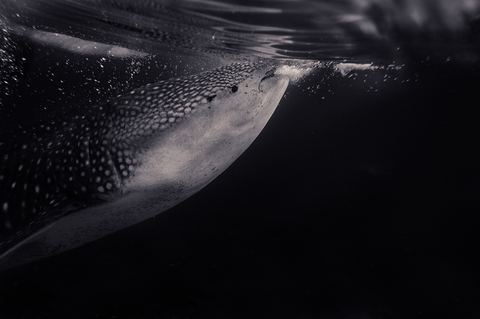
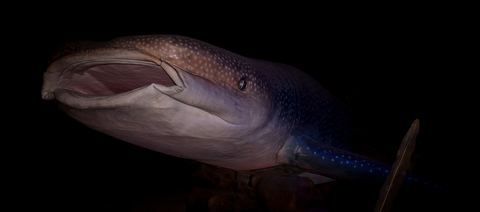
- How to spot it: A gentle giant with a broad flat head and a dark back covered in a unique pattern of white spots and stripes.
Its body & abilities
- Size: It commonly reaches 10 to 12 meters long, with the largest around 18 meters.
- Weight: Large adults can weigh over 20,000 kilograms.
- Body & adaptations: Its enormous mouth can be over a meter wide and holds thousands of tiny teeth it does not use for biting.
- Top speed: It cruises slowly, usually around 5 kilometers per hour.
- Strength: It filters huge amounts of water, straining out tiny food while letting the water flow out its gills.
- Senses: It uses smell and sight to find dense patches of plankton and fish eggs.
- Growing up: It grows slowly and takes many years to mature, which makes it vulnerable.
Where it lives
- Habitat: It lives in warm open oceans and gathers near coasts where food blooms.
- Where in the world: Found in tropical and warm seas around the world.
- Territory: It migrates thousands of kilometers to reach seasonal feeding gatherings.
What it eats
- Diet: It is a filter feeder that eats plankton, tiny fish, and fish eggs.
- Favorite foods: It feasts on krill, copepods, and clouds of fish and coral eggs.
- How it hunts: It feeds by opening its huge mouth to swallow water, or by suction-gulping thick patches of food.
How it behaves
- How it moves: It glides with slow, powerful sweeps of its tall tail.
- When it is active: It feeds by day at the surface and can dive deep to cooler waters.
- Family life: It is usually solitary but forms large feeding aggregations when food is rich.
- How it talks: It is quiet and relies on finding food rather than social signaling.
- Babies: Females carry many eggs inside and give birth to live pups, sometimes hundreds in one litter.
Its place in nature
- Role in nature: By feeding on plankton it links the smallest ocean life to the largest, and draws ecotourism.
- Conservation: It is listed as Endangered, threatened by ship strikes, bycatch, and fishing.
- Dangers: Adults have few predators due to their size, but young ones can be eaten by large sharks.
Life & legacy
- How long it lives: It may live 70 to 100 years or more.
- In our culture: Loved worldwide as a gentle giant, it is celebrated in festivals and marine parks.
- Where to see it: Swimmers meet them at seasonal gatherings off Cancun and La Paz in Mexico, and in the Philippines.
- Fun fact: Every whale shark has a spot pattern as unique as a fingerprint, used by scientists to tell them apart.
Video: Pixabay · Photos: Wikimedia Commons & Pixabay