🐾 Hammerhead Shark
Hammerhead Shark
Photos







Who it is
- Scientific name: Family Sphyrnidae
- Family & relatives: This is a group of about ten shark species in the family Sphyrnidae, all sharing the famous hammer-shaped head.
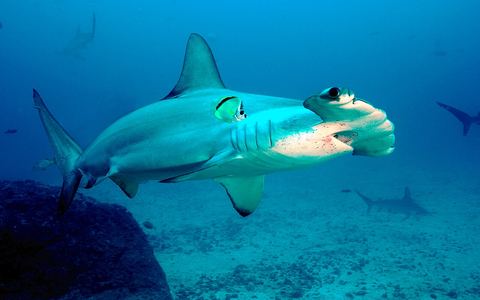
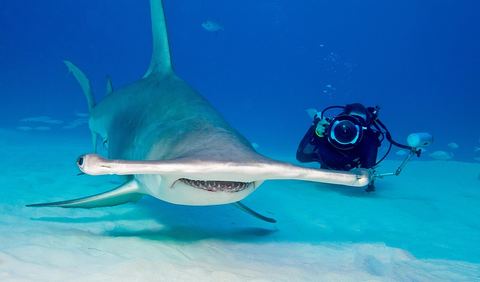
- How to spot it: Instantly known by their wide, flattened head called a cephalofoil, with an eye on each end.
Its body & abilities
- Size: Sizes range from about 1 meter in small species to nearly 6 meters in the great hammerhead.
- Weight: The largest species, the great hammerhead, can weigh over 400 kilograms.
- Body & adaptations: The wide head spreads out their senses and helps them turn sharply while swimming.
- Top speed: They are agile swimmers that can accelerate quickly to chase prey.
- Strength: Their spread-out electric sensors give them a super sense for finding hidden prey.
- Senses: The wide head holds many electric-sensing pores, giving a broad sweep to detect buried animals.
- Growing up: Young are born live in coastal nurseries and grow up in shallow, protected waters.
Where it lives
- Habitat: They live in warm coastal and open waters, from reefs to the deep edge of the shelf.
- Where in the world: Found in tropical and warm-temperate seas worldwide.
- Territory: Many species migrate long distances with the seasons and warm currents.
What it eats
- Diet: They are carnivores that especially love stingrays, plus fish, squid, and crustaceans.
- Favorite foods: Stingrays are a favorite meal, and hammerheads seem unbothered by their stings.
- How it hunts: They use the wide head to pin stingrays against the seafloor before eating them.
How it behaves
- How it moves: They swim with smooth tail beats and can sometimes swim tilted on their side to save energy.
- When it is active: Many hunt more actively at night and rest or school by day.
- Family life: Some species form huge daytime schools of hundreds, a rare sight among sharks.
- How it talks: They use body movements and positions within the school to interact.
- Babies: Females give live birth to litters that can range from a few pups to several dozen.
Its place in nature
- Role in nature: As predators they help control ray and fish numbers on reefs and sandy flats.
- Conservation: Several large species, like the great and scalloped hammerheads, are Critically Endangered from overfishing.
- Dangers: Adults face few natural threats, but people and the fin trade are their biggest danger.
Life & legacy
- How long it lives: Larger hammerheads can live 20 to 30 years or more.
- In our culture: Their odd head shape makes them favorites at aquariums and in ocean documentaries.
- Where to see it: Divers see big schools at places like the Galapagos, Cocos Island, and the Sea of Cortez in Mexico.
- Fun fact: Their eyes sit on the ends of the hammer, giving them almost a full view all around.
Video: Pixabay · Photos: Wikimedia Commons & Pixabay