🐾 Crab
Crab
 ▶
▶
Tap a video to play it
Photos








Who it is
- Scientific name: Infraorder Brachyura
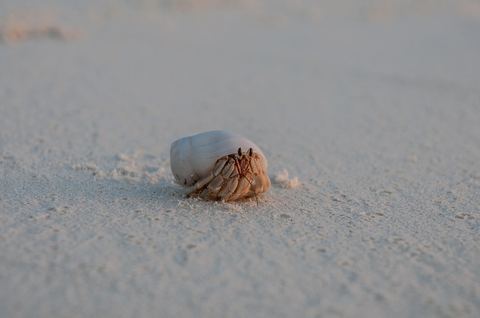
- Family & relatives: Crabs are crustaceans, closely related to lobsters, shrimp, and hermit crabs.
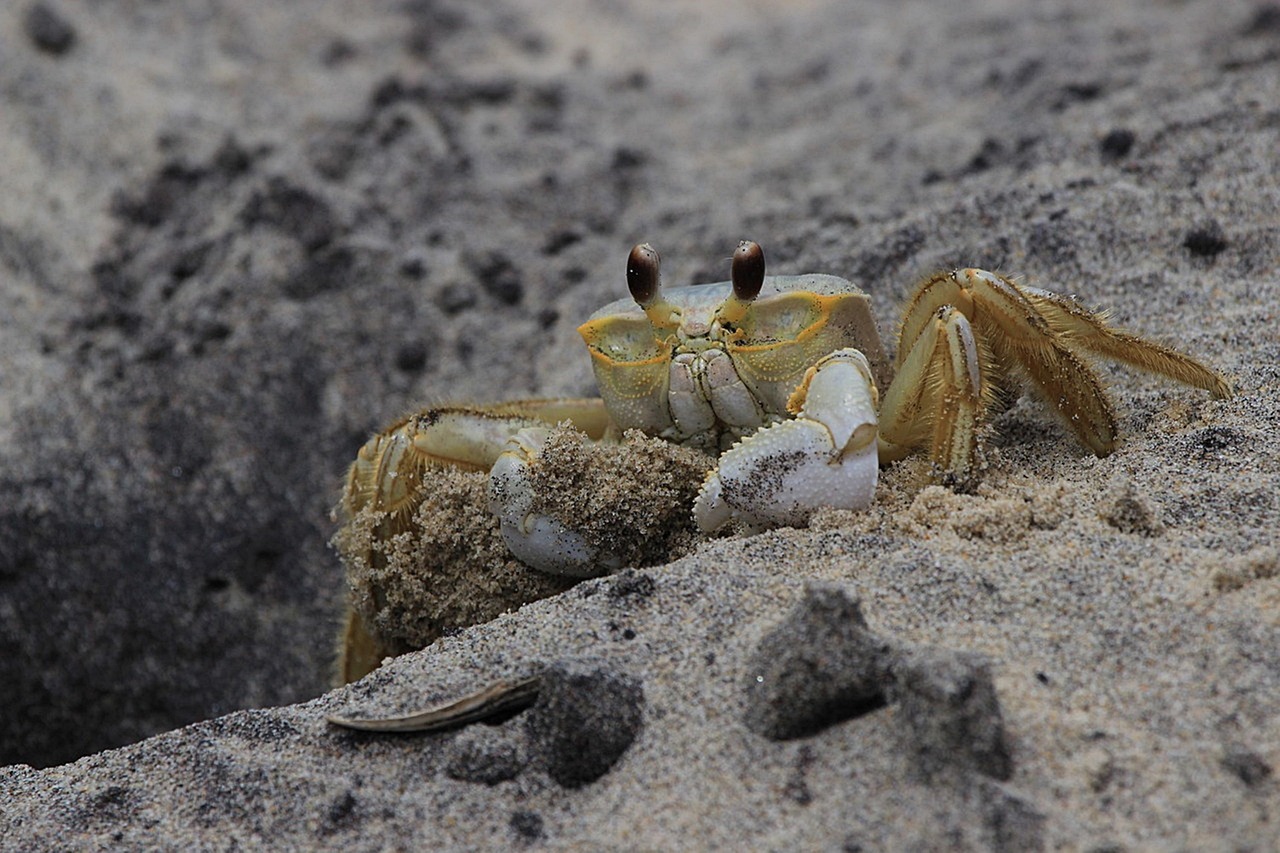
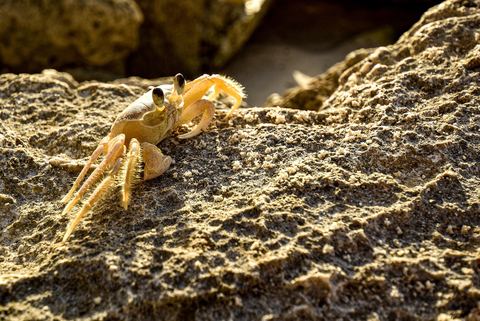
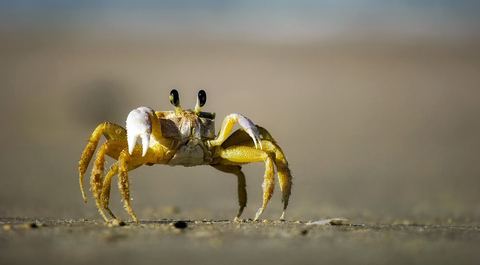
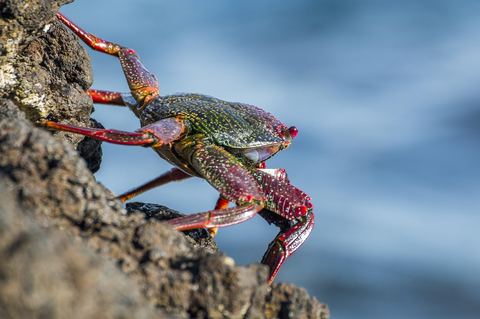
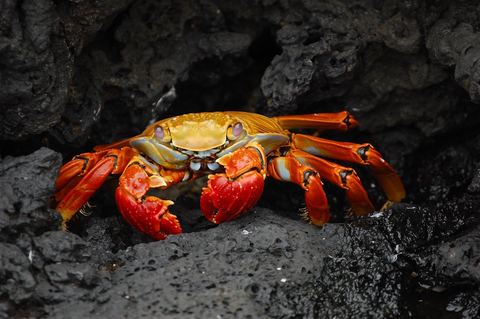
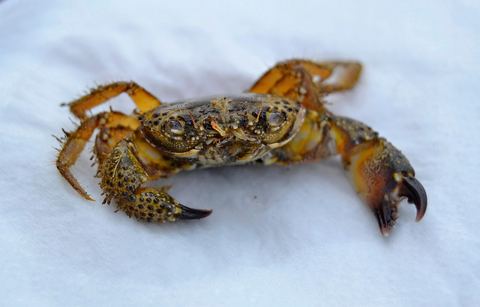
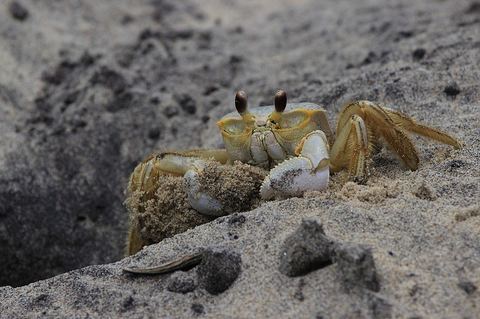
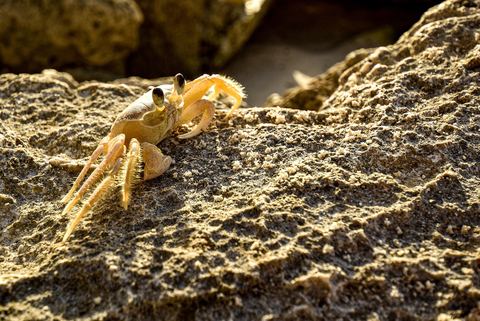
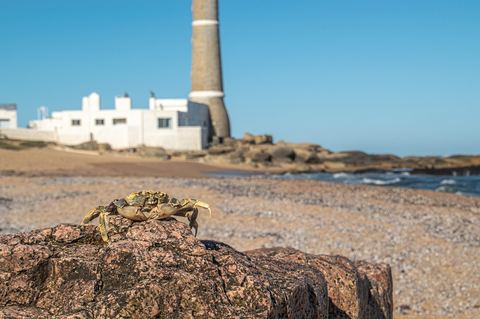
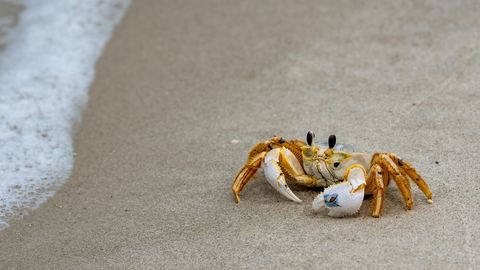
- How to spot it: A crab has a wide, flat body shell, a folded tail tucked under its belly, and one pair of pinching claws in front.
Its body & abilities
- Size: Crabs range from pea-sized pea crabs to giant Japanese spider crabs with a leg span of several feet.
- Weight: Most crabs weigh only a few ounces, though the largest kinds can weigh several pounds.
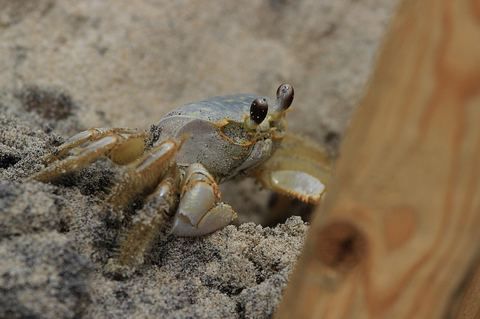
- Body & adaptations: A crab has a hard outer shell called a carapace, ten legs total, stalked eyes, and gills for breathing.
- Top speed: Crabs are famous for scuttling sideways, which is often quicker than moving forward.
- Strength: Their claws are strong tools for crushing shells, grabbing food, and defending themselves.
- Senses: Crabs see with compound eyes on stalks and taste and smell the water using tiny hairs on their legs and antennae.
- Growing up: Crabs hatch as tiny floating larvae, drift as plankton, then settle and molt many times as they grow.
Where it lives
- Habitat: Crabs live in oceans, on rocky shores, in mangroves, and some kinds live in fresh water or on land.
- Where in the world: Crabs are found in seas all over the world, from tropical reefs to cold polar waters.
- Territory: Many crabs hide in burrows or rock crevices and defend their shelter from other crabs.
What it eats
- Diet: Most crabs are omnivores, eating whatever they can find on the sea floor.
- Favorite foods: They eat algae, worms, clams, snails, small fish, and bits of dead animals and plants.
- How it hunts: A crab uses its claws to pick up food, tear it apart, and pass it to its mouth.
How it behaves
- How it moves: Crabs walk and scuttle sideways on their eight walking legs, and some can swim with paddle-shaped back legs.
- When it is active: Many crabs are most active at night or when the tide covers their home.
- Family life: Some crabs live alone, but others gather in huge groups, like the millions of red crabs on Christmas Island.
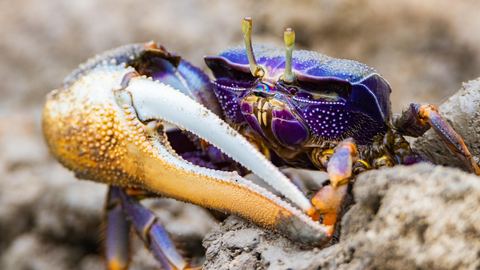
- How it talks: Male fiddler crabs wave their one giant claw to signal and attract mates.
- Babies: Females carry thousands of fertilized eggs under their tail flap until the larvae hatch into the water.
Its place in nature
- Role in nature: Crabs are cleaners of the sea floor and important food for fish, birds, octopuses, and people.
- Conservation: Many crabs are common, but overfishing and habitat loss threaten some kinds.
- Dangers: Fish, octopuses, sea birds, and larger crabs eat crabs, and they are most at risk right after molting.
Life & legacy
- How long it lives: Small crabs may live a few years, while larger species can live over ten years.
- In our culture: Crabs appear in the zodiac sign Cancer and are a favorite seafood around the world.
- Where to see it: Look for crabs in tide pools, under rocks at the beach, on docks, and in aquariums.
- Fun fact: A crab can drop off a leg or claw to escape a predator and then grow a new one back.
Video: Pixabay · Photos: Wikimedia Commons & Pixabay